
Build a Current Owner Record for Schoharie County
A bare name answers nothing. To establish who owns a property in Schoharie County, build a record card for the parcel instead. Start with the SBL, the situs address, and the municipality, then add the roll owner, the roll year, and the mailing address exactly as the roll labels it. Pull the deed book and page listed on the tax roll. Track down the newest recorded deed you can locate. Note the recording date and vesting language. This discipline matters. It keeps the owner of record distinct from an assessment snapshot, and it stops a mailing line or a GIS label from standing in as proof of ownership.
| Parcel anchor | SBL, situs, municipality |
|---|---|
| Assessment evidence | Final roll year, page, displayed owner |
| Recorded evidence | Newest deed date, parties, book/page or instrument |
| Open issue | Later search, split, entity, protected address, or access gap |
Locate the Assessed Owner of Record
Roll work begins with the right municipality. Choose the correct town or village in the county inquiry or roll selector, then run a property search by address, last name, or segmented SBL. Keep the SWIS code out of the parcel fields. Beyond the owner of record, the roll may list property class, school district, acreage, a deed reference, assessed values, exemptions, and taxable columns. Always cite the roll type and date. A tentative roll and a final roll are not interchangeable. The Real Property Tax Office provides the official parcel and roll routes shown here.
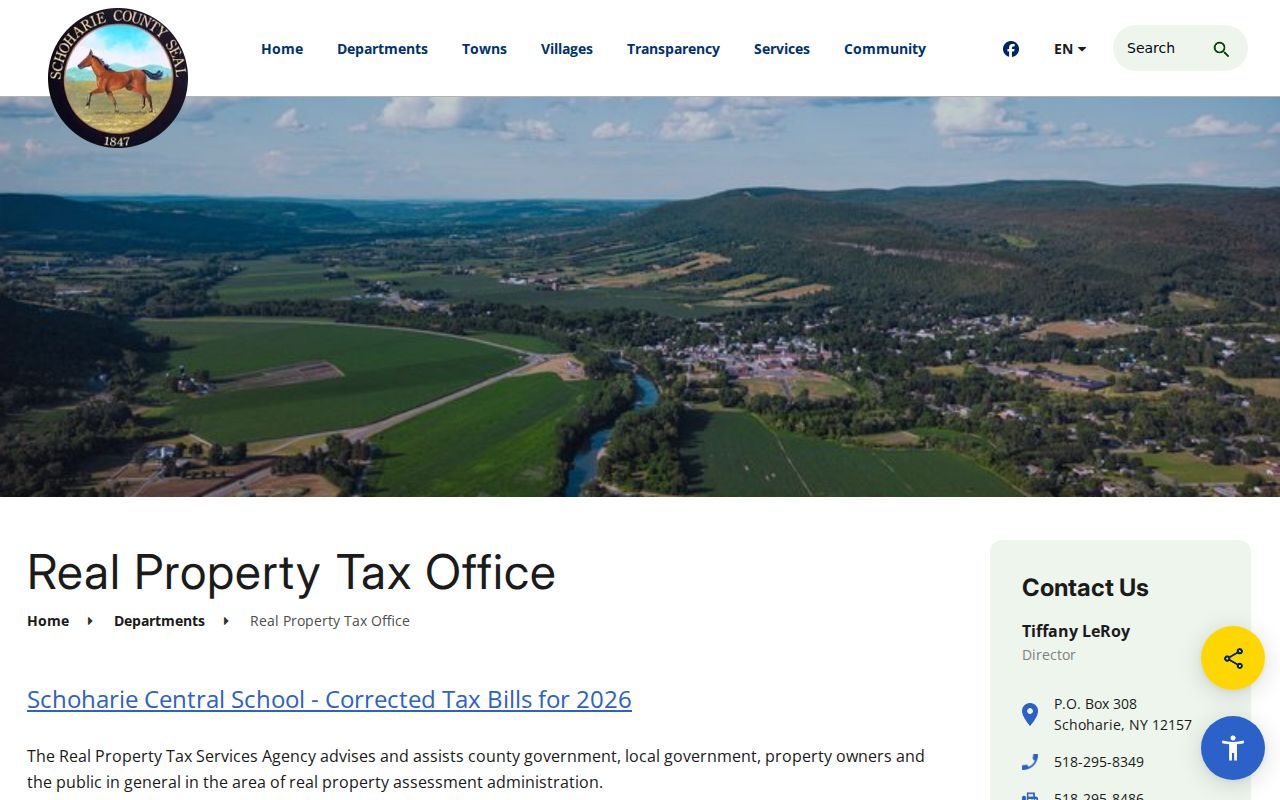
The assessor's page names the assessed owner of record, but it is a starting point rather than proof of current legal ownership.
Confirm the Current Owner with a Recorded Deed
Deed records settle the question. Carry the deed book and page from the roll into SearchIQS and read the grantee and vesting language closely. Then check for later deeds under the grantor, the grantee, a trust, an estate, or an entity name. The roll can lag a recent transfer. Match the legal description and the prior reference too. That step keeps a similarly named person from being mistaken for the subject. A neighboring parcel can also slip in if you skip it.
- Anchor the parcel with municipality and SBL.
- Record the final-roll owner and snapshot date.
- Open the referenced deed.
- Search forward for later conveyances.
- State any unresolved gap and confirmation route.
Why the Roll and Deed May Differ
Rolls and deeds disagree for ordinary reasons. A deed recorded after taxable status may not surface until a later assessment cycle. Parcel splits can leave the original parcel visible while a part gets its own number. Annexation can shift the village context. Estates, survivorship, trusts, and entity transfers can also reshape the owner of record itself. Compare dates and consecutive rolls before choosing one record over another.
The public roll archive runs from 2005 forward. Earlier ownership belongs in the deed chain and the archive, not in any claim that the current roll supplies historical title.
Entity and Protected-Address Cautions
The New York business-entity search has a narrow job. It can clarify an LLC or corporation's legal name, status, jurisdiction, and organization date. It also shows the service address and agent. It does not establish parcel ownership. The same caution applies to mailing addresses. A public mailing line may serve as correspondence only or as a substitute under the Address Confidentiality Program. Do not describe either one as the owner's residence without another lawful source.
Use lawful contact only. Public mailing information may support a property matter, but it must never be used to harass or expose a protected person.
Write the Final Current Owner Finding
Write the finding in two dated sentences. One states the final-roll owner. The other states the latest recorded conveyance located. Add a third sentence only for a conflict or an access limit. When the names agree, say they agree as of those two source dates. When they differ, leave them separate rather than collapsing them into an unsupported conclusion. For legal reliance, recommend a current Clerk search or professional title work.
What the Schoharie County Current Owner Record Shows
| Owner of Record | |
|---|---|
| Vesting / Tenancy | |
| Mailing Address | |
| Situs Address | |
| Deed Reference | |
| Ownership Since |
Confirming the Current Owner in Schoharie County
- to confirm vesting]
- Owner of record
- Vesting
- Registered agent
Reaching a Schoharie County Property Owner
Lawful use.