
Trace Former Schoharie County Owners Backward
Work the chain of former owners in reverse. Anchor the parcel first with its SBL and the newest recorded deed. Note the grantee on that deed. Then search that same party as a grantor. Chase the prior deed reference it cites. Keep going as long as the legal description still describes the same land. A tax roll history can flag the year a name or acreage shifted. But Schoharie County deed records and filed maps carry the real ownership chain.
| Transfer date | Grantor to grantee | Deed type | Book/page or instrument |
|---|---|---|---|
| Newest located | Copy exact names | Record form | Save citation |
| Prior reference | Reverse the search role | Note estate or trust | Follow cited deed |
| Earlier branch | Track variants | Check split or map | Log unresolved gap |
Read the Grantor-Grantee Chain
A grantor conveys, and a grantee receives. The direct index lists grantors, while a reverse index organizes grantees. Search exact spellings plus sensible variants. Then verify each hit against the town, legal description, SBL, acreage, and prior citation. Mortgages and liens can add color to a property's story. They never replace the deed sequence itself.
- Open the current or newest known deed.
- Copy its prior deed reference and description.
- Find the grantor's acquisition as an earlier grantee.
- Check maps, estates, and boundary adjustments at each branch.
- Stop and label the gap when continuity cannot be proved.
Use Roll Deed References as Bridge Fields
The public assessment roll often prints a deed book and page. It appears right beside the parcel entry. That makes it a fast bridge from an SBL to the County Clerk's deed index. Compare consecutive final rolls. Spot when the assessed name, acreage, property class, or value changed. Then test that change against the recorded instrument itself. The roll alone should never be used to name former title holders. Assessed owners and owners of record do not always match. The roll archive runs as PDFs from 2005 to the present. That range suits modern transitions well. It is not the county's full ownership history.
Splits, Maps, Estates, and Broken Chains
Straight name chains break in predictable ways. A subdivision, boundary-line adjustment, estate, survivorship transfer, trust, or annexation. Each can split one parcel's story into branches. The Clerk's FAQ notes that maps may be searched by map number and creator. Many deeds cite filed maps directly. Compare lot labels and legal descriptions carefully. That way a parent parcel is never confused with a later child parcel. When a former owner drew a map, searching that name with the town and map number can recover context. That context is what the current parcel name hides. A survey may also exist without ever being filed. Document both the recorded evidence and that limit honestly.
Older Ownership and Irene-Era Archive Work
Schoharie County records management describes holdings reaching back to documents as early as 1795. Restoration work also continues after Hurricane Irene. Scanning projects, indexing, imports, and back-entry all continue. An online endpoint is rarely the true beginning of the chain. Give staff the record series, volume, page, parties, town, and map number whenever an apparent gap appears. The official records management page details both the archive's time depth and its ongoing restoration.
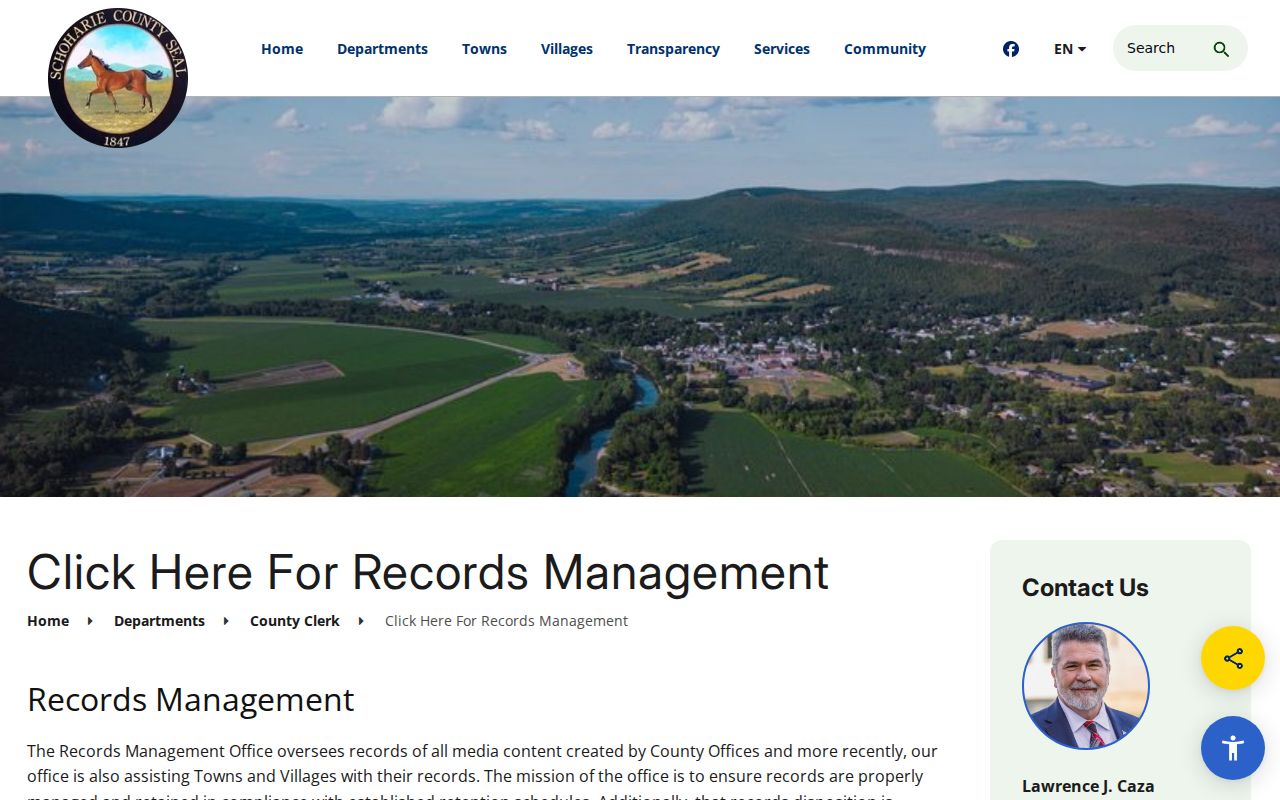
Note: treat the archive's described holdings as a strategy for deeper searches, not as proof that any single volume survived.
Cite Previous Owners without Filling Gaps
Cite every link in the chain fully: recording date, grantor, grantee, and deed type. Include the complete book and page or instrument number, plus the prior reference you followed. Note any name variants and whether the legal description carried forward unchanged. If the chain simply stops, say so plainly. Name the last confirmed owner. List the searches attempted, and the archive or probate step still needed.
A chain is only as strong as its links. Do not turn an inferred family, mailing address, or roll name into a recorded transfer.
Tracing Former Owners of a Schoharie County Property
| Source | Years It Covers | Where Held | What It Shows |
|---|---|---|---|
Walking the Schoharie County Deed Chain Backward
- Grantor / grantee
- Chain of title
- Legal description
How Far Back Schoharie County Ownership Records Go
Lawful use.