
Begin with Schoharie County Deed Records
The County Clerk keeps the deed records for Schoharie County. The office sits at 284 Main Street in Schoharie. For online land-record access, the county links to SearchIQS. The Clerk's office also provides public computers for in-person searching. Every Schoharie County deed records search should begin with the newest known conveyance. Record its date, grantor, grantee, and instrument type. Note the book and page or instrument reference. Also note the legal description and the citation to the prior deed. From there, follow that prior reference backward deed by deed. An owner-name list alone cannot replace this chain of citations.
| Recorded paper | What it can show | What to verify |
|---|---|---|
| Deed | Conveyance, parties, consideration, legal description | Recording date and vesting |
| Mortgage or release | Security interest or recorded discharge | Later assignments and satisfaction |
| Easement | Recorded access or use right | Burdened and benefited land |
| Filed map | Lots, subdivision, adjustment, survey context | Map number and linked deeds |
| Lien or lis pendens | Claim or pending-action notice | Status and later release or judgment |
SearchIQS and the Clerk's Public Computers
The SearchIQS portal supports grantor, grantee, book and page, and map-number searches. These searches draw from county materials. Its guest landing page gives no confirmed coverage year or screen layout. If the portal stalls, take a narrow request to the Clerk. That request can go in person or by phone. Give the parties, the years, and the parcel if you can. Recording and filing stops at 4:30 p.m. on regular business days. The County Clerk page identifies the land-record services shown here.
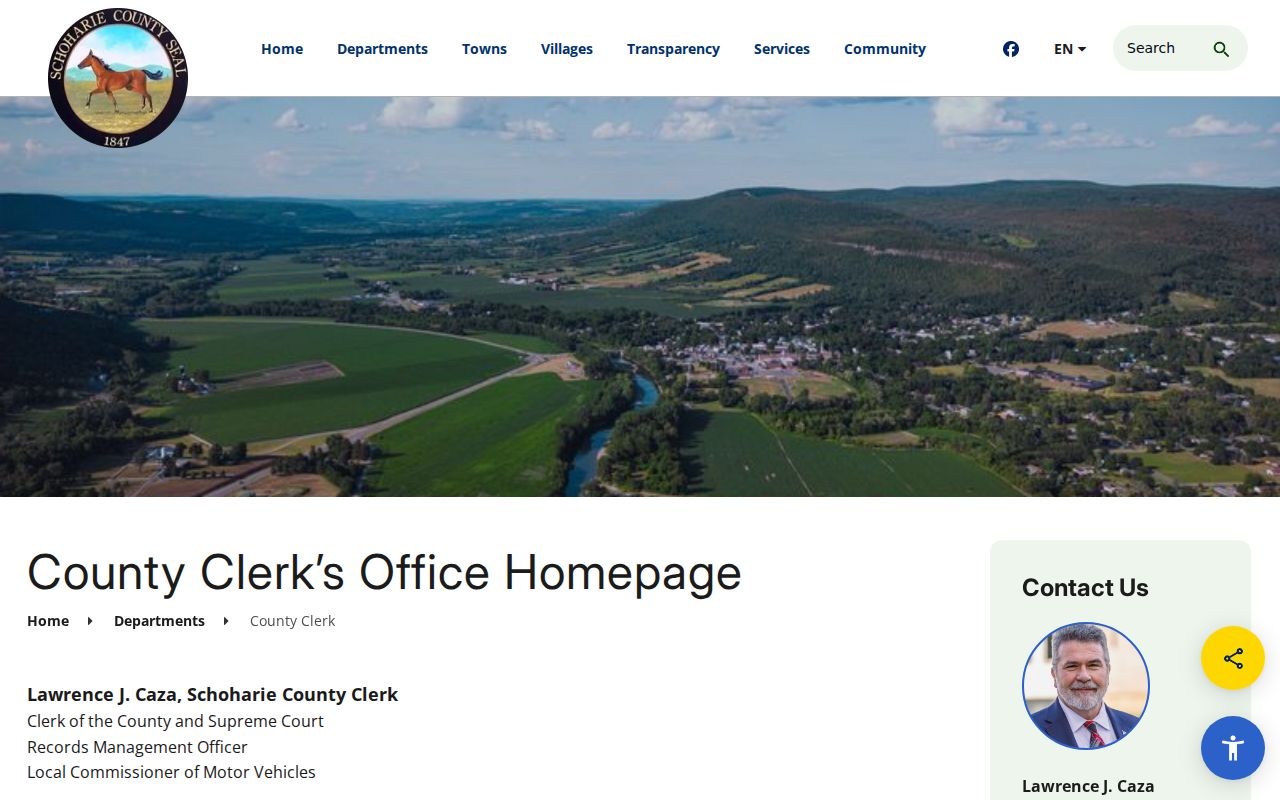
The County Clerk is the official custodian. The portal and public computers are the access routes. A current deed result, though, still has to come from the index or the office itself.
Read a Schoharie County Deed from Newest to Oldest
Start with the recording endorsement on any Schoharie County deed. Then read the parties and vesting language, the legal description, reservations, easements, and the consideration statement. Finish with the signatures, acknowledgments, and the prior deed reference. The grantor conveys and the grantee receives. A quitclaim names only the form of conveyance. So it does not prove that no interest passed. Likewise, a warranty deed does not excuse you from checking later liens. It also does not excuse you from easements or competing instruments in the deed records.
- Anchor the current parcel with its SBL and newest roll reference.
- Open the latest located deed and save its full citation.
- Search the grantor as an earlier grantee.
- Follow the cited prior deed and any filed map.
- Log gaps, name variants, estates, splits, and unresolved branches.
Maps, Splits, and Boundary Adjustments
The Clerk's FAQ confirms that maps can be searched two ways. You can search by map number or by the person who created the map. That person is often the homeowner. Many deeds cite filed maps directly. Subdivision maps, lot adjustments, and boundary-line-adjustment maps must be filed. Not every survey carries that requirement. When acreage changes, compare the deed description against the map lots. Use the consecutive assessment rolls too. Only then describe the change. A tax map is an assessment tool, nothing more. It is not a conveyance and not a boundary survey. For boundary questions, the recorded deed and the filed map are the stronger sources. A licensed surveyor gives the final boundary opinion.
Older Deeds and the Irene Restoration Record
County records-management holdings reach back to 1795. Hurricane Irene damaged materials in 2011. The county has since handled restoration, scanning, indexing, import, and back-entry work. An online chain that stops abruptly may signal an imaging or index gap. It may not mean a missing deed. When that happens, ask about the restoration status of a precise series, volume, and page. Supply the last known parties, the town, and the map number. Staff can then locate the right Schoharie County deed records. The records-management source documents the historical and restoration context in this image.
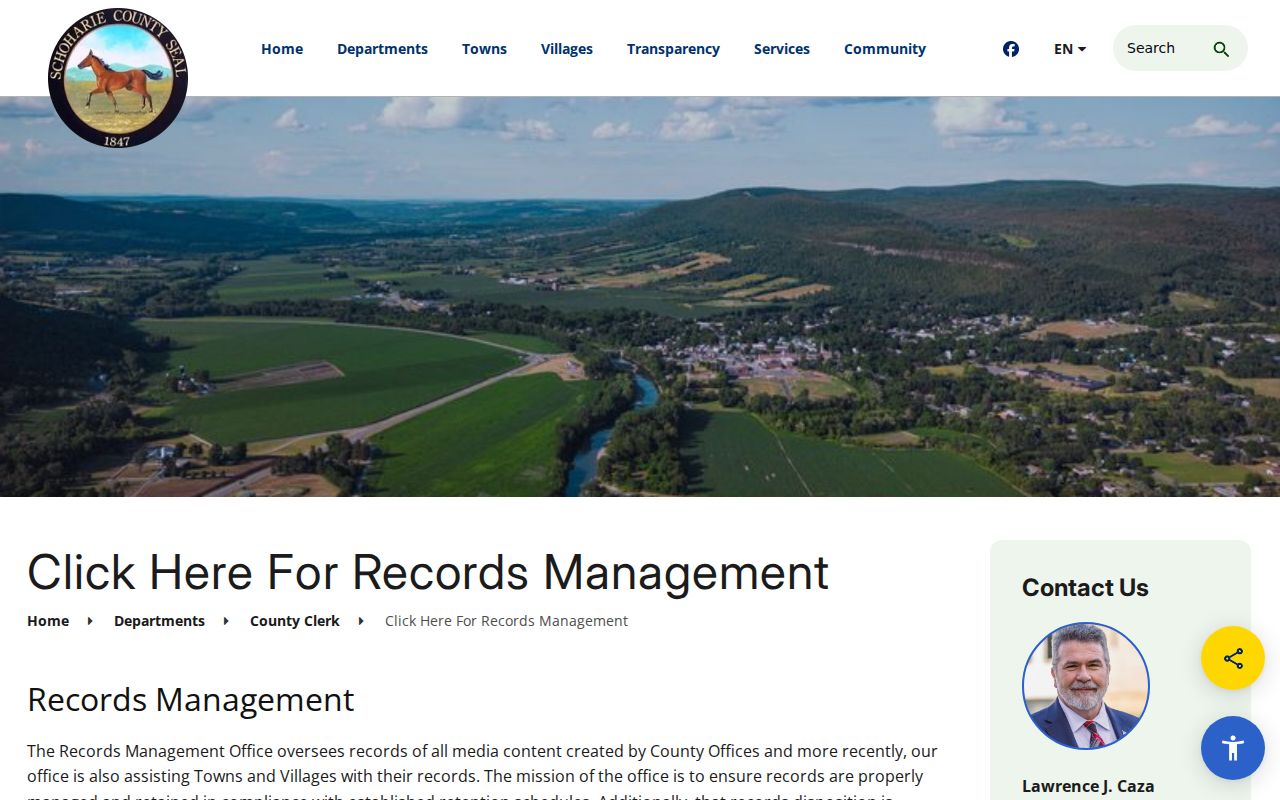
That context can explain a digital gap. It cannot prove any particular deed is missing.
Copies, Certifications, and Research Notes
The Clerk publishes a fee schedule separating recording charges, searches, per-page costs, and certified copies. Fees change and depend on the service. Always consult the current official schedule instead of reusing an old total. State clearly what kind of copy you need. A copy can be an ordinary image, an office copy, or a certified record. A certified copy authenticates the document itself. It is not a title opinion. Write an unresolved-chain note whenever a link cannot be proved. Name the last confirmed deed and the search variants tried. List the years and any suspected split or estate issue. Add the next archive or office step. That keeps the work reproducible without turning an inference into a fact.
Fraud Alerts and Responsible Deed Research
The Clerk offers a free Fraud Alert subscription. It notifies a subscriber whenever a filing is recorded in Schoharie County deed records. The filing must carry a subscribed name. An alert can prompt review of the land records. It cannot prevent a filing or decide whether fraud occurred. Name variants and entity names also limit its reach. Treat it as a tip line, not a complete ownership monitor. The official Fraud Alert page supplies the limitations represented in this capture.
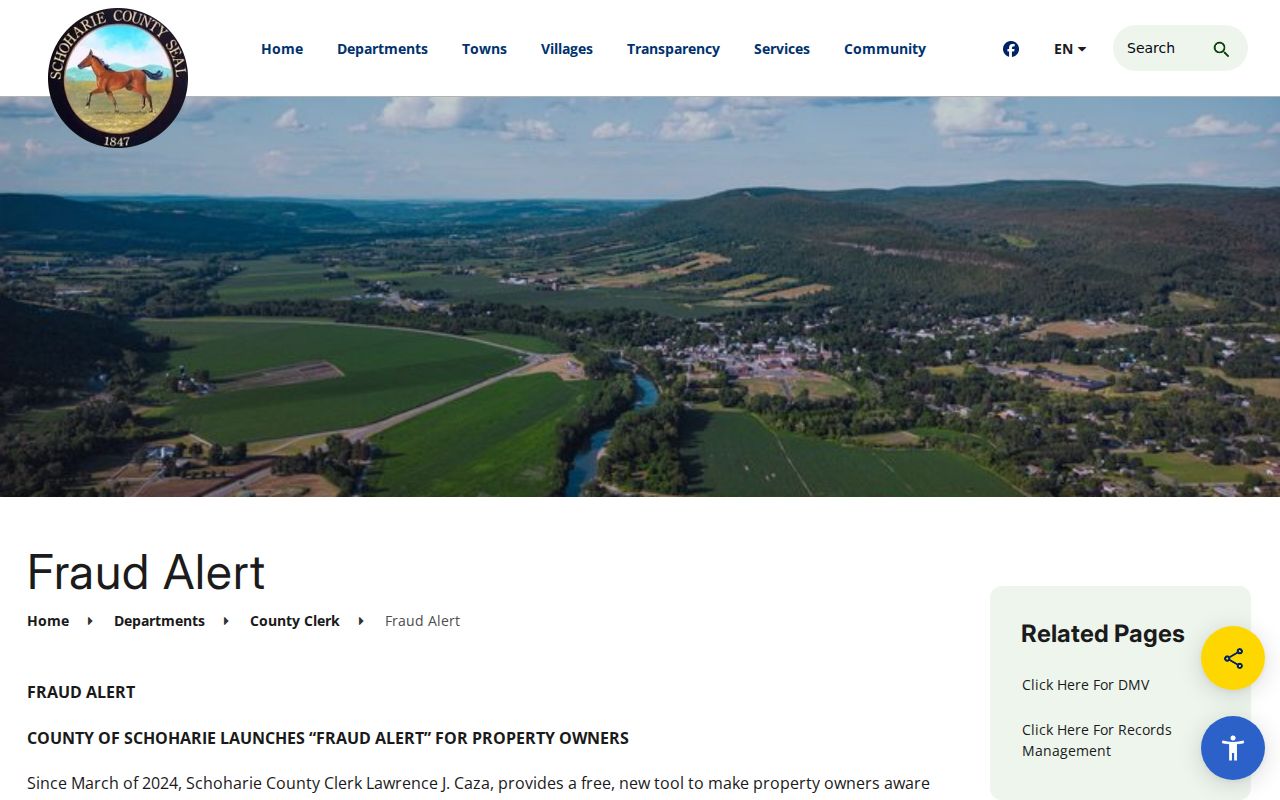
The service is available to any property owner. Any alert still needs verification in the land records before you act on it.
Schoharie County Deed Records and What They Show
| Deed Type | What It Does | Common Use |
|---|---|---|
| Warranty deed | ||
| Quitclaim deed | ||
| Grant / special warranty | ||
| Trustee / executor deed | ||
| Tax deed |
The Schoharie County Grantor-Grantee Index
- Grantor
- Grantee
- Chain of title
- Book/Page vs Instrument #
Getting a Copy of a Schoharie County Deed
Recorded, not guaranteed.