
Decide What “Who Owns” Means in Schoharie County
Two records answer the question differently. The County Clerk's deed records show the newest recorded conveyance, while the assessment roll lists an owner of record as of a stated date. The roll also gives a mailing address, SBL parcel number, values, and a deed reference. It can lag behind a fresh recording. A GIS map places the parcel in context but proves nothing about title. Cite the source and date beside every name you report.
Address route
Address to roll, SBL, deed reference, latest conveyance, and GIS check.
Name route
Name to municipal roll, matching SBL and situs, then grantor-grantee confirmation.
Find the Assessed Owner First
Start with the current tax inquiry or the public roll archive. Pick the right town or village first. Then search by last name, street address, or segmented parcel ID. Copy the displayed owner exactly as written. Also copy the mailing line, situs, roll year, page, SBL, and deed book and page. Be careful with the mailing address. It is not proof of residence. A village ZIP does not settle village jurisdiction on its own.
| Fact | Source label | Safe wording |
|---|---|---|
| Owner field | Roll year and page | Assessment roll owner |
| Conveyance | Recording date and citation | Latest recorded deed located |
| Tax | Tax year and retrieval date | Displayed tax snapshot |
| Map | Layer and date | Parcel context, not a survey |
Confirm Who Owns the Property in the Clerk's Index
The roll's deed book and page become the bridge into the Clerk's index on SearchIQS. Read the grantee and vesting language there. You will also see the recording date, the legal description, and any prior reference. A thorough property search continues past that one instrument. Look for later deeds, mortgages, and liens under both parties and their name variants. An owner of record can change with the newest recording. The online query may be blocked. Use the County Clerk's public computers then. You can also send the Clerk the SBL, town, parties, approximate date, and last known citation. The County Clerk page lays out the official land-record route.
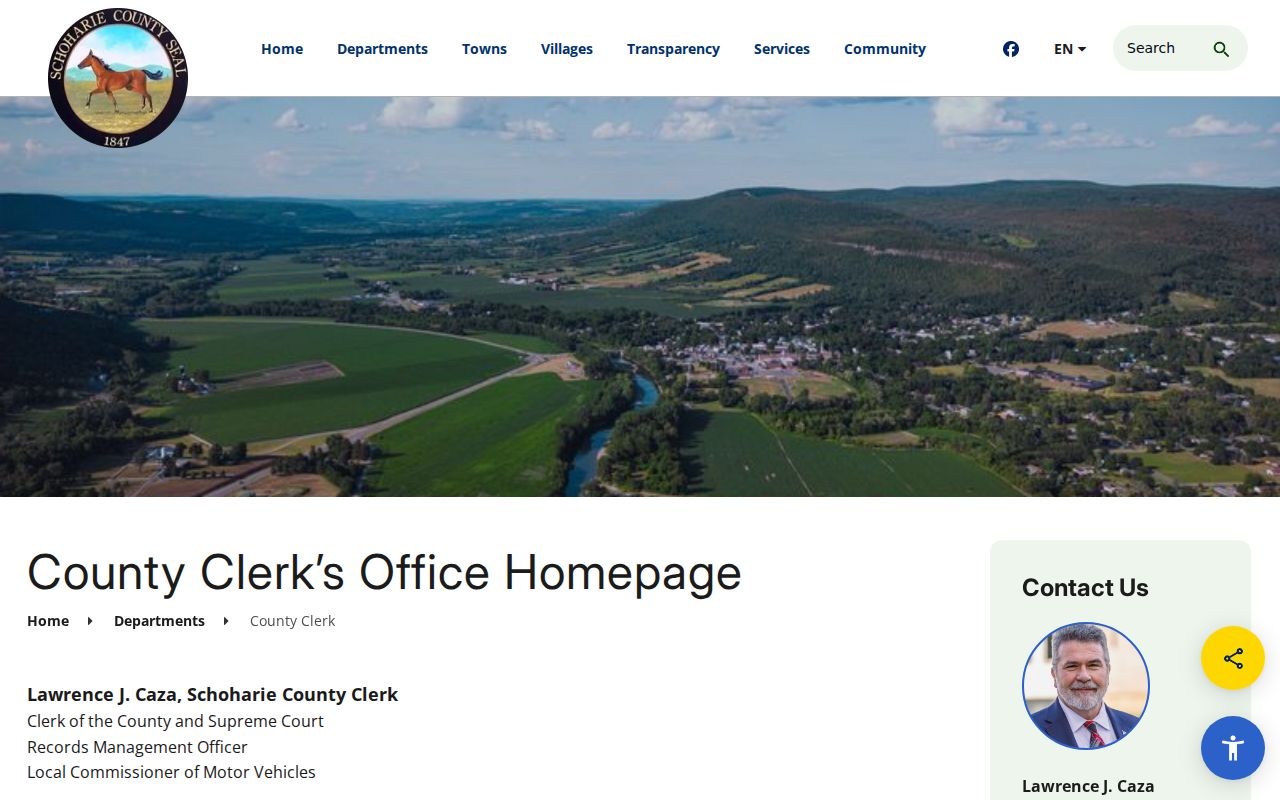
The Clerk's page identifies the records custodian; the owner answer still rests on a located deed.
Trusts, Estates, LLCs, and Name Variants
A trust, estate, or LLC often appears as the grantee instead of a person. Search the full recorded name, plus common punctuation variants. New York's Department of State entity search can return the organization date, jurisdiction, county, service address, agent, and status. Those facts describe the entity well. They still cannot tie it to a specific parcel without the deed. An estate or survivorship transfer can also break a simple name chain. Probate and court material helps here, but keep it separate from the conveyance itself. A mortgage holder, lien claimant, or permit applicant is not automatically the owner of record.
Resolve Roll and Deed Disagreements
Dates explain most conflicts. Compare the deed recording date with the roll's taxable-status and valuation dates. Then check the next final roll. A partial transfer, parcel split, annexation, address change, trust, or delayed update can also create the gap. Report both records until later evidence settles the question. The annual roll archive reaches back to 2005. Consecutive pages can show when an assessed name or acreage shifted. For older title depth, follow deed references back through the deed records. Rely on Records Management rather than treating the roll archive as the start of ownership.
Privacy and a Source-Labeled Owner Answer
New York's Address Confidentiality Program can substitute a safe address in public-facing transactions. Confidential voter information is never a property-owner lookup. Never attempt to recover a protected location. Schoharie County property records support lawful due diligence, title and boundary research, tax questions, and civic use, not harassment.
Report the gap. If no later deed was located or the portal was blocked, say so and identify the office step needed to confirm ownership.
How to Find Who Owns a Schoharie County Property
- ]
Where Schoharie County Owner Information Comes From
| Source | Owner Info It Gives | Access |
|---|---|---|
| Assessor / tax roll | ||
| Recorder deed index | ||
| Secretary of State | ||
| GIS parcel viewer |
What "Who Owns This Property" Cannot Tell You
Lawful use.