
Separate Schoharie County Property Value Types
A Schoharie County property value is not one number. The roll may show an assessment, a full-market estimate, a taxable value after exemptions, or the consideration reported in a deed. Each answers a different question. None is automatically a current appraisal or an expected sale price, so cite the municipality, the roll, the year, and the exact value label whenever you quote one.
| Value type | Meaning | Recorded in |
|---|---|---|
| Land assessment | Assessed land component | Assessment roll |
| Total assessment | Assessed parcel total | Assessment roll |
| Full-market estimate | Roll estimate using assessment level | Assessment roll |
| Taxable value | Jurisdiction-specific value after exemptions | Tax roll columns |
| Consideration | Amount stated in a transfer record | Recorded deed material |
Look Up the Assessed Value
Pick the municipality first. Then search by address, owner, or segmented SBL. Save the final-roll page itself, because the numbers to cite include the land and total assessment, the full-market estimate, the uniform percentage, any exemptions, and each taxable jurisdiction column. SWIS and SBL are different codes. Keep them separate, note whether the roll is tentative or final, and use the Real Property Tax Office as the hub that connects these value and roll sources.
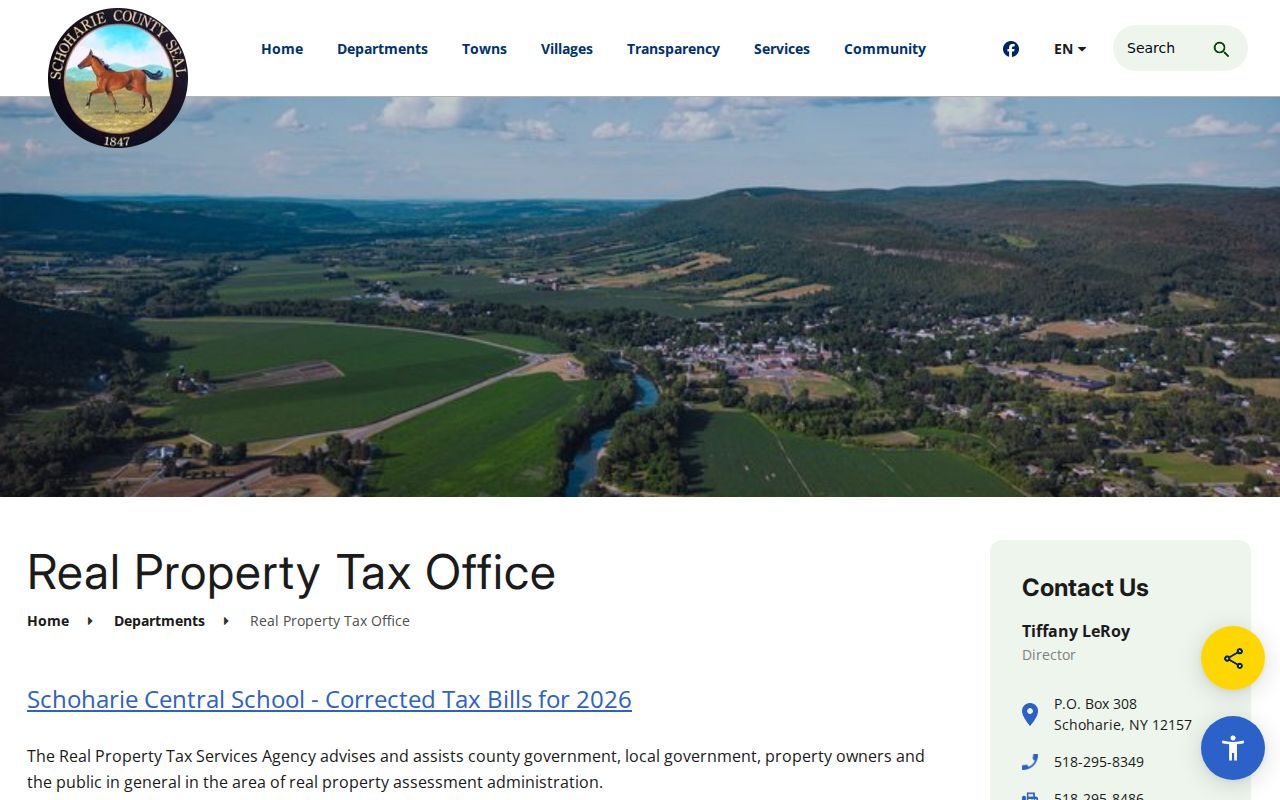
The assessor's office page lists the official access routes, though a parcel's value should be cited from the dated roll.
Assessment Level and Equalization Context
Assessed value is not market value. An assessment level shows how the two relate within one municipality. An equalization rate lets you compare assessing units fairly. Ranking raw assessments across towns and villages misleads, because each unit assesses at its own level. The 2024 Village of Cobleskill roll lists a 54.80 uniform percentage. That figure speaks only for that village roll in that year.
New York's Municipal Data Portal and state assessment guidance help you place any municipality in context. A full-market estimate worked out from the roll stays an administrative figure. It is not a licensed appraisal of the property.
Dates behind a Schoharie County Assessed Value
The calendar drives every value. March 1 sets taxable status and exemptions. May 1 brings the tentative roll, and July 1 sets both the valuation date and the final roll. September opens the school-roll stage. A deed recorded after the relevant cutoff may not align with that year's owner field or value, so check the official assessment calendar for the timing that gives any figure its meaning.
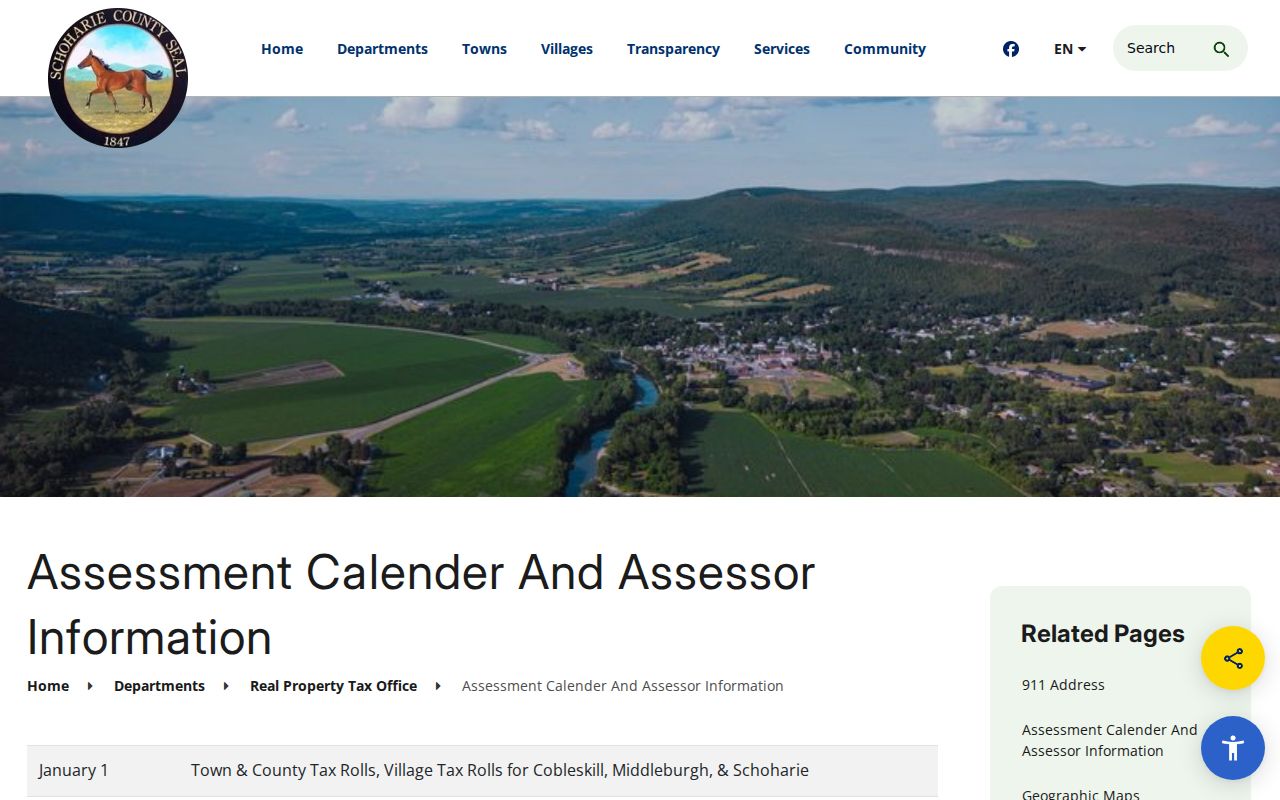
The capture helps distinguish the valuation snapshot from later sales or property changes.
Compare Values across Consecutive Rolls
Download consecutive final rolls of the same type first. Then build one row per year with acreage, class, land and total assessment, full-market estimate, exemption codes, taxable columns, and the deed reference. A change needs a cause. Check whether a deed, subdivision, boundary adjustment, permit, or visible imagery change lines up with the difference. A value shift alone proves nothing. It does not confirm a sale or an improvement. A recorded consideration amount can help, but it may reflect a transfer type that is not an open-market transaction, so preserve the instrument type and its context.
What the Property Value Does Not Tell You
An assessed value will not price the property today. It says nothing about structural condition, private easements, title defects, environmental problems, or a surveyed boundary. Exemptions can lower taxable value. It also varies among jurisdictions, and GIS or imagery may add context without ever replacing an appraisal.
Assessment is not appraisal. Use the roll for its stated administrative purpose and obtain qualified valuation advice when a current market opinion is required.
The Values on a Schoharie County Property Record
| Value | What It Is | Where |
|---|---|---|
| Assessed value | ||
| Market / appraised value | ||
| Last sale price | ||
| Land vs improvement |
Looking Up a Schoharie County Property Value
- Assessed value
- Market / appraised value
- Level of assessment
What a Schoharie County Assessor Value Is Not
Value vs price.